

At Aqua-Tox we go beyond red light therapy with NEO Science’s Full Body Light Therapy Bed, a first for the UK Market.
The Neo Science bed has multiple modes of light therapy to help promote recovery, pain relief and support with skin conditions.
Full Body Red Light Therapy Bed in Hertford
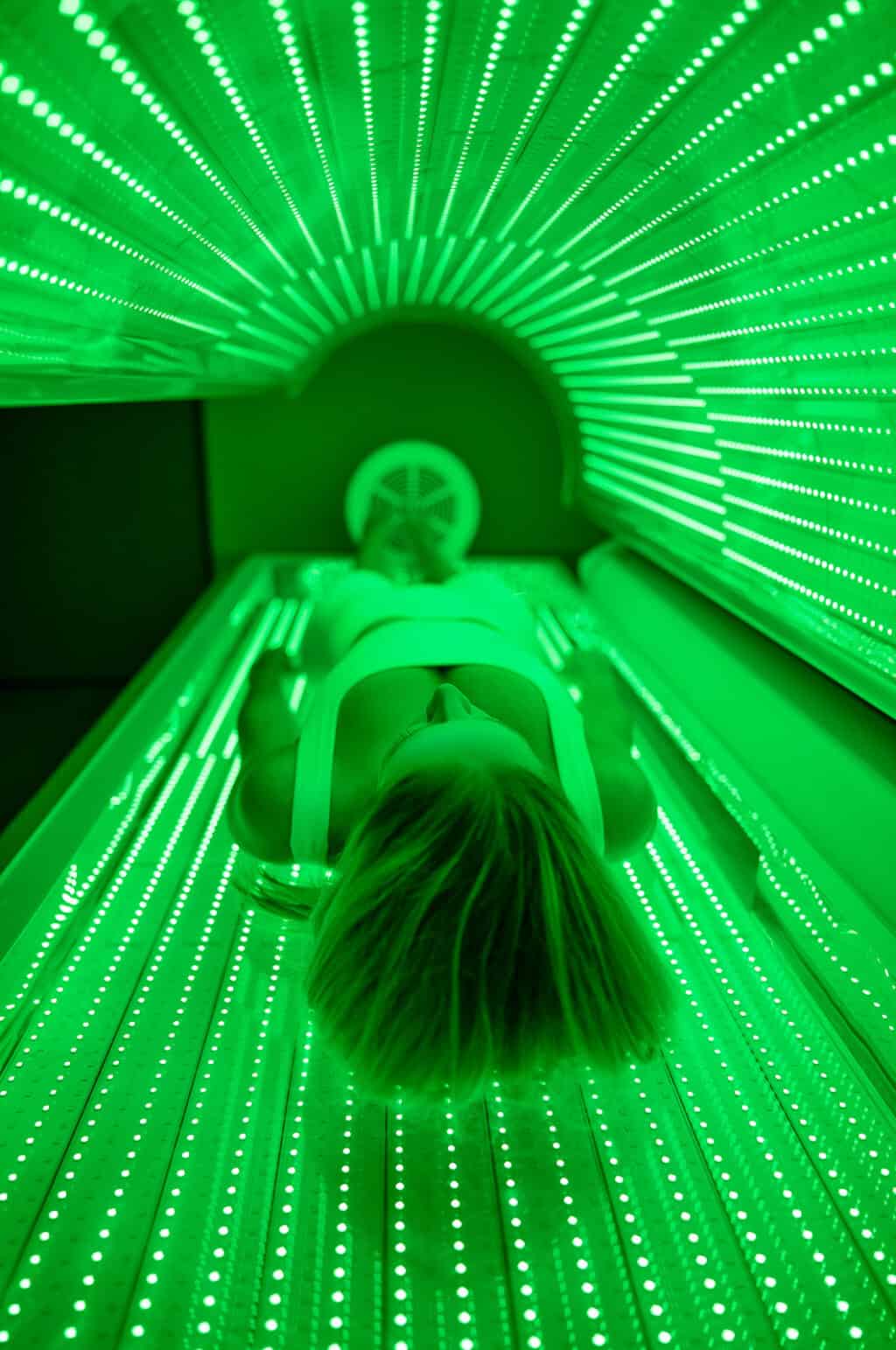
At our Hertford clinic we use the NEO Science full body light therapy bed. Instead of treating one small area with a handheld lamp or panel, the bed covers your whole body at once, front and back, in a single 10 minute session. You choose from four programmes that combine red, near infrared, blue and green light, and the bed sits in its own private room so you can relax with minimal clothing.
Sessions are £45, with courses of 5 and 10 sessions and an unlimited monthly membership for regular users. If you would like to read more first, see our article on how light therapy really works.
What is Red Light Therapy?
Red light therapy (aka Photobiomodulation) works by using very specific wavelengths of light to stimulate cellular function. These wavelengths promote increased energy production within cells, particularly within the mitochondria.
This process helps reduce inflammation and enhances the repair and regeneration of tissues, contributing to better physical performance and resilience against diseases.
What Modes of LED Light Therapy are Available?
Red: Restore and Pulse
Using both Red Light Wavelengths and Near Infrared, the Restore function helps reduce pain, inflammation and oxidative stress, increases blood circulation and cell regeneration and stimulates collagen production. The Pulse function is favoured by those looking for muscle recovery, treating injuries and reducing pain with high intensity bursts of light.
Pink: Cleanse
Using Red and Blue Light wavelengths can help reduce bacteria and improve the appearance of the skin. It can also help enhance mood, alertness and attention.
Green: Calm
Green light wavelengths can help reduce the appearance of dark spots on the skin, brighten and even skin tone and can also help alleviate migraines and light sensitivity.
What Happens in a Red Light Therapy Session
Your therapist introduces you to the bed, talks through which programme suits what you want from it, and checks nothing on your health form rules it out. You then have the room to yourself. We recommend minimal clothing so the light reaches as much skin as possible.
For Restore, Pulse and Calm you can simply close your eyes, and we have red light glasses if you are sensitive to bright light. For Cleanse, which uses blue light, we recommend goggles. The session lasts 10 minutes and you can carry on with your day straight afterwards.
Benefits of Red, Blue & Green LED Light Therapy
LED light therapy has many benefits. Red light therapy is used to reduce pain & inflammation, increase blood circulation, stimulate collagen production and promote cellular health. Blue light therapy is used for skin concerns such as breakouts, and to lift mood and alertness. Green light therapy can help brighten and even out skin tone, improve sleep quality and reduce migraines & light sensitivity.
Improves circulation
Dilates blood vessels which increases blood flow in the circulatory system.
Reduces inflammation
Red and near infrared light are used to help ease everyday aches, pains and inflammation, particularly after training or injury.
Reduces recovery time
Stimulates mitochondria and stem cells for faster recovery and accelerates the muscle repair process.
Improves skin health
Stimulates the production of collagen which increases tissue repair and can help to reduce fine lines, wrinkles and scars.
Clearer-Looking Skin
The Cleanse programme combines red and blue light, which is used to help reduce bacteria on the skin and improve the appearance of breakouts.
Calmer Skin
Clients with skin concerns such as psoriasis and eczema use red light as part of their routine. We recommend speaking to your GP or dermatologist alongside it.
Improves Sleep Quality
Many clients find a session helps them relax and sleep better, and green light is used to support the body's natural circadian rhythm.
Migraine & Light Sensitivity
The Calm programme uses green light, which some clients use to help with migraines and sensitivity to light.
Red, Blue & Green LED Light Therapy Pricing
10 Minute Treatment
Single Session
A 10 minute LED light therapy session, choose from Restore, Pulse, Cleanse and Calm.
£45
5 Treatments
Treatment Course
A course of 5 light therapy sessions of your choice (each session lasts 10 minutes) for ongoing health and skin benefits.
£180
10 Treatments
Treatment Course
A course of 10 light therapy sessions of your choice (each session lasts 10 minutes) for ongoing health and skin benefits.
£335
Unlimited Treatments
Monthly Membership
Unlimited LED light therapy sessions (each session lasts 10 minutes) for ongoing health and skin benefits.
£300 / month
LED Light Therapy is also included in our Aqua-Tox monthly memberships and spa experience days.
Pair It With Cryotherapy or the Infrared Sauna
Many of our clients book red light therapy alongside our whole body cryotherapy chamber or our private infrared sauna. If you are combining it with cryotherapy, we suggest the cold first and the light second.
Red light therapy is also included in our monthly memberships and spa experience days, which is the most cost effective way to use it regularly.
LED Light Therapy FAQs
How does red light therapy work?
Red light therapy works by using very specific wavelengths of light to penetrate the skin and stimulate cellular function. These wavelengths promote increased energy production within cells, particularly within the mitochondria.
This process helps reduce inflammation and enhances the repair and regeneration of tissues.
Mitochondria are crucial for overall health because they produce the majority of the cell's ATP, which is essential for energy, enabling all bodily functions. Their role in energy production also supports efficient cellular repair and recovery, contributing to better physical performance and resilience against diseases.
Mitochondrial biogenesis is the process by which cells increase the number of mitochondria, the energy-producing structures within cells. In simple terms, it's like a factory adding more production lines to make more products. The product is ENERGY. Thus you can recover faster, heal quicker, remove waste and toxins more efficiently.
Mitochondrial biogenesis is essential for sports, performance, and recovery – both physical and mental.
Which modes of LED Light Therapy are available?
Red: Restore and Pulse
Using both Red Light Wavelengths and Near Infrared, the Restore function helps reduce pain, inflammation and oxidative stress, increases blood circulation and cell regeneration and stimulates collagen production. The Pulse function is favoured by those looking for muscle recovery, treating injuries and reducing pain with high intensity bursts of light.
Pink: Cleanse
Using Red and Blue Light wavelengths can help reduce bacteria and improve the appearance of the skin. It can also help enhance mood, alertness and attention.
Green: Calm
Green light wavelengths can help reduce the appearance of dark spots on the skin, brighten and even skin tone and can also help alleviate migraines and light sensitivity.
Is Red Light Therapy Safe?
How often should I have Red Light Therapy?
Should I do LED Light Therapy alongside other therapies?
Combining cryotherapy and light therapy can amplify the benefits by leveraging the anti-inflammatory and pain-relieving effects of cryotherapy alongside the cellular repair and regeneration promoted by light therapy. Together, they enhance overall recovery, boost energy production, and improve tissue health more effectively than either therapy alone.
In which order should I do Light Therapy & Cryotherapy?
While the order is not critical, we recommend starting with cold therapy (cryotherapy) and then moving to light therapy (photobiomodulation). The reason is that cold therapy triggers the release of endorphins, cytokines, and hormones, which help reduce inflammation and pain. Following up with red light therapy improves circulation and enhances cellular repair, helping these beneficial substances move more effectively through the body to promote overall recovery and healing.
Can I do too much Light Therapy?
We recommend 10-minute treatments. More time does not imply more benefits, and studies have shown that too much exposure may result in diminishing returns. We recommend 1 application per day and 3-5 sessions per week, or at least 1 day of the week off.
What differences should I notice with LED Light Therapy?
Many people see and feel the benefits after just one treatment. Initial benefits include improved sleep, improved mood, full body relaxation, energy boost (physical & mental), migraine relief, brighter complexion and reduced aches and pains.
If you wish to use red light therapy regularly then you can make this more cost efficient by booking a course. Red light therapy is also available with our memberships. Please see our memberships page for more details.
What differences will I notice after more frequent uses (20 - 40 sessions)?
Over time, benefits include:
- Increased endurance and elevated performance.
- Shortened recovery time.
- Pain relief (moderate to significant).
- Skin improvements (visible).
- Noticeable and measurable decrease in inflammation.
- Faster healing of injuries.
If you wish to use red light therapy regularly then you can make this more cost efficient by booking a course. Red light therapy is also available with our memberships. Please see our memberships page for more details.
What is the difference between Red Light Therapy, Blue Light Therapy & Green Light Therapy?
Blue light therapy uses a wavelength of around 415 nanometers, while red light therapy uses a wavelength of around 660 nanometers.
Blue light therapy is mainly used to treat skin conditions and mood disorders, while red light therapy is used to treat inflammation, pain, and muscle recovery. Blue light therapy is thought to be most effective when used with red and near infrared light therapy.
Green light therapy can help reduce the appearance of dark spots on the skin, brighten and even skin tone and can also help alleviate migraines and light sensitivity.
What happens during the Red Light Therapy session?
A therapist will introduce you to the therapy device, ensure you’re comfortable and advise you on the best way to use your treatment time to effectively target any health concerns that you may have. You will then lay on the light therapy bed to receive the treatment. We recommend minimal clothing to ensure that the red light can penetrate your skin and give the full benefits.
Can Red Light Therapy damage my skin like a sunbed?
No, red light therapy does not damage the skin and does not use damaging UV light like a sunbed.
Can I go on the bed without goggles and just keep my eyes shut?
Can I have specific light wavelengths on the bed?
For overall benefits we do recommend the combination of lights in the preset programmes. However your treatment can be set up to run just with one light wavelength if there is a specific requirement for this. Our therapists will be able to advise on the best course of treatment for you and any specific conditions that you wish to treat.
Can I use topical eczema cream with Red Light Therapy?
Unfortunately not. If you are using a topical steroid or eczema cream you will need to wait for 2 weeks after the last application to have red light therapy.
What is the minimum age for Red Light Therapy?
Young people aged 13 and over can have red light therapy treatment when accompanied by an adult.
Where will the Red Light Therapy session take place?
Our Red light therapy LED bed is located in a private room in our clinic in Hertfordshire.
Can anyone use Red Light & LED Light Therapy?
Red light therapy cannot be used if:
- You are pregnant (only on doctors advice).
- You have a pacemaker fitted - red light therapy cannot be used over a pacemaker or applied to the thorax.
- You have a malignant tumour.
- You are taking drugs that have heat or light sensitivity.
- You are allergic to light therapy or take photosensitizers (such as chlorpromazine).
- You have an active haemorrhage or shock, and internal organ damage.
- You have a high fever, active tuberculosis, vasculitis obliterans etc.
- You have severe heart or kidney disease, such as heart failure, myocarditis, uremia etc.
- Users with skin diseases should use it only under the guidance of a doctor.
If you take thyroid medication, please speak to your GP before starting a course of red light therapy.
How much does red light therapy cost?
A single 10 minute session on our full body LED bed is £45. A course of five sessions is £180 and a course of ten is £335. For regular use, unlimited sessions are £300 a month, and red light therapy is also included in our monthly memberships and spa experience days.
Where can I get red light therapy near me in Hertfordshire?
Our NEO Science full body light therapy bed is at Aqua-Tox, Foxholes Farm, London Road, Hertford SG13 7NT, in a private room with free parking on site. We are within easy reach of Ware, Welwyn Garden City, Hatfield and Harlow, and close to Hertford North station.
How long is a red light therapy session?
Each session on the bed lasts 10 minutes. More time does not mean more benefit, so we keep to 10 minutes and recommend one session a day at most. For the best results we suggest three to five sessions a week over at least a month, with at least one day off each week.
Can I have red light therapy if I have a pacemaker?
Red light therapy cannot be used over a pacemaker or applied to the chest area, so please tell us before booking if you have one fitted. We ask every client to complete a health form first, and your therapist will confirm whether the bed is suitable for you and how your session should be set up.
What should I wear for red light therapy?
We recommend minimal clothing, such as underwear or swimwear, so the light can reach as much of your skin as possible. The bed is in a private room, so you undress in private. If you use a topical steroid or eczema cream, you will need to stop it for two weeks before your session.
Is red light therapy the same as a sunbed?
No. Red light therapy uses red, near infrared, blue and green LED light and does not use the UV light a sunbed does, so it will not tan or burn your skin. It works on how your cells produce energy rather than on skin pigment, and sessions are just 10 minutes long.